
Cermet indexable inserts for finishing and fine turning
Cermet inserts for finishing and fine turning of steel: smooth, shiny surfaces, tight tolerances and long tool life in a steady cut. Order by noon for same-day dispatch.
Products (selection)
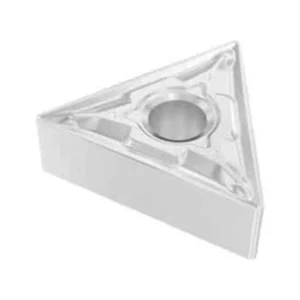
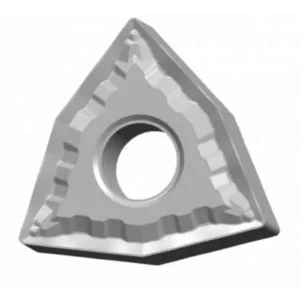
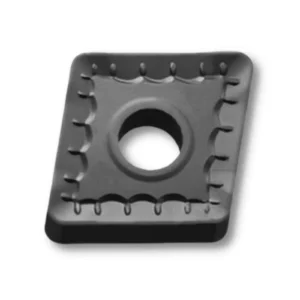
View all 5 products in the shop
Product pages, basket and checkout are in German. Questions? Phone +49 9346 92230 or WhatsApp +49 171 4189690 – we also answer in English.
What is cermet?
Cermet – from “ceramic” and “metal” – is a cutting material made of titanium-based hard materials (titanium carbonitride) in a nickel-cobalt binder. It is very wear-resistant and hardly reacts with steel: hardly any built-up edges form, the surface becomes smooth and shiny, and dimensions stay the same over many parts. On the other hand, cermet is less tough than carbide.
Cermet or carbide – when is cermet worth it?
| Cermet | Carbide | |
|---|---|---|
| Machining | Finishing and fine finishing, small to medium depth of cut | Roughing to finishing |
| Cut | steady, continuous | also interrupted cuts |
| Materials | Steel, stainless steel, nodular cast iron | all material groups |
| Strength | Surface finish, dimensional accuracy, tool life | Toughness, process reliability |
Application: cutting data and cooling
Cermet shows its strengths at fairly high cutting speeds, small to medium depths of cut and a steady feed. A small corner radius and a low feed give the best surface. Because cermet does not tolerate rapid temperature changes well: turn dry or with generous, even cooling.
Cermet inserts in the shop
- TNMG 160408 and TNMG 160408 for steel – finishing
- WNMG 080408 and WNMG 080408 for steel – finishing
- CNMM 190616
Other cutting materials: Carbide · Cermet · PCD · CBN – all indexable inserts with finder and guide to the ISO designation.
Frequently asked questions about cermet inserts
What is the difference between cermet and carbide?
Cermet is a titanium-based cutting material (titanium carbonitride in a nickel-cobalt binder); carbide consists of tungsten carbide in cobalt. Cermet is more wear-resistant and hardly tends to form built-up edges, so surfaces become smoother and dimensions more accurate. Carbide is tougher and the better choice for roughing and interrupted cuts.
Can I use cermet inserts for roughing?
Better not. Cermet is made for finishing and fine finishing with small to medium depths of cut. For roughing, large infeeds and interrupted cuts, a tough carbide insert is the right choice.
Which materials are cermet inserts suitable for?
Above all for steel (ISO P) in finishing, and also for stainless steel and nodular cast iron in a steady cut. For aluminium, use polished carbide or PCD inserts.
Dry or with coolant?
Cermet does not tolerate rapid temperature changes well. It is best to turn dry or with generous, even cooling – do not cool intermittently.
Do the inserts fit holders from other manufacturers?
Yes. Indexable inserts are standardised to ISO 1832: if the basic shape, clearance angle, size and thickness match the insert seat, the insert fits any holder with that seat – regardless of the manufacturer. Corner radius and chipbreaker do not change the seat.