
Carbide indexable inserts for turning – CVD- and PVD-coated
Over 100 carbide indexable inserts to ISO from stock: negative ones such as CNMG, DNMG and WNMG, positive ones such as CCMT, DCMT and VCMT – for steel (P), stainless steel (M), cast iron (K) and superalloys (S), polished inserts for aluminium (N), plus threading and parting-off inserts. Price per piece, usually from 10 pieces; order by noon for same-day dispatch.
Products (selection)
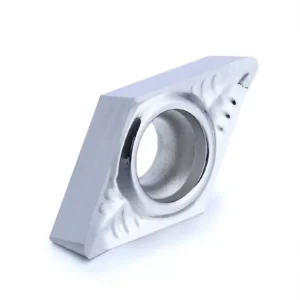
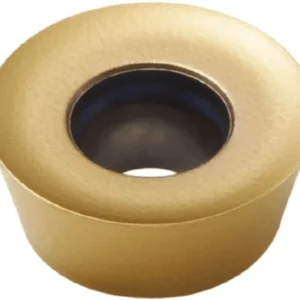
Wendeschneidplatte RCMX 0803
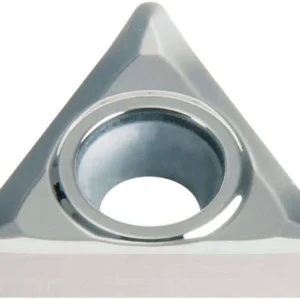
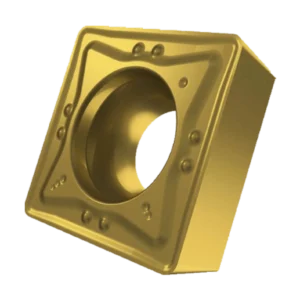
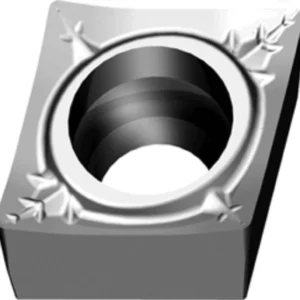
Wendeschneidplatte CCGT 09T3023 poliert für Aluminium
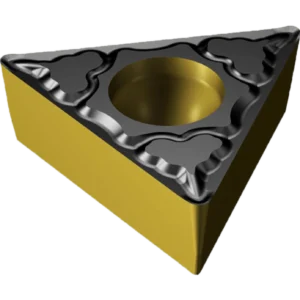
Wendeschneidplatte TCMT 16T308
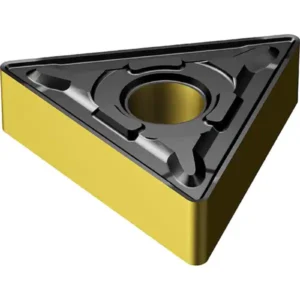
View all 108 products in the shop
Product pages, basket and checkout are in German. Questions? Phone +49 9346 92230 or WhatsApp +49 171 4189690 – we also answer in English.
Carbide: the standard for indexable inserts
Carbide consists of fine tungsten carbide grains in a cobalt binder. It is hard and at the same time tough enough for roughing, interrupted cuts and changing conditions – which is why most indexable inserts are made of carbide.
Which grade for which material?
| ISO group | Material | Matching in the shop |
|---|---|---|
| P | Steel and cast steel | CNMG …-OPF / -OPM / -OPR |
| M | Stainless steel | CNMG …-OMF / -OMM / -OMR, -MF, -MSF |
| K | Cast iron | CNMG …-OKM / -OKR, CNMA |
| N | Aluminium, non-ferrous metals | polished CCGX, DCGX, SCGX, TCGX, RCGT, CCGT 09T3023 |
| S | Superalloys, titanium | CNMG -OSM, -SMM |
For many other inserts, you choose the material group and chipbreaker (fine finishing, finishing, roughing) as a variant on the product page.
CVD, PVD or uncoated and polished?
| Version | Properties | Typical application |
|---|---|---|
| CVD-coated | thick, very wear-resistant layers (e.g. TiCN, aluminium oxide), heat-resistant | Steel and cast iron, roughing to finishing, higher cutting speeds |
| PVD-coated | thin layers (e.g. TiN, TiAlN, AlTiN), sharp cutting edges | Stainless steel, superalloys, small depths of cut, interrupted cuts |
| uncoated, polished | very sharp, smooth rake face | Aluminium and non-ferrous metals, no built-up edge |
WSH-Tools.de offers all common PVD coatings for its tools.
Negative or positive?
Negative inserts such as CNMG, DNMG and WNMG (clearance angle 0°) can be used on both sides, are very stable and economical – from roughing to finishing. Positive inserts such as CCMT, DCMT and VCMT cut more easily, need less force and are suitable for small machines, slender parts, aluminium and internal turning.
Shapes in the range
| Shape | Negative (double-sided) | Positive (single-sided) |
|---|---|---|
| C Rhombic 80° | CNMG, CNMA, CNMM | CCMT, CCGT, CCGX |
| D Rhombic 55° | DNMG | DCMT, DCGX |
| S Square 90° | SNMG | SCMT, SCGX |
| T Triangular 60° | TNMG, TNMA | TCMT, TCGX, TPGH |
| V Rhombic 35° | VNMG | VCMT, VBMT |
| W Trigon 80° | WNMG | – |
| R Round | – | RCMX, RCGT |
| K Parallelogram 55° | KNUX | – |
Plus thread turning inserts and parting-off inserts ZQMX. What the letters and numbers mean is explained in the guide to the ISO designation.
Other cutting materials: Carbide · Cermet · PCD · CBN – all indexable inserts with finder and guide to the ISO designation.
Frequently asked questions about carbide inserts
Which carbide insert for which material?
The grade depends on the ISO material group: P for steel, M for stainless steel, K for cast iron, N for aluminium and non-ferrous metals, S for superalloys. On our CNMG inserts this is shown in the chipbreaker code, for example OPR for roughing steel or OMM for finishing stainless steel; for many other inserts you choose the material and chipbreaker as a variant.
CVD or PVD – which coating do I need?
CVD coatings are thick and very wear-resistant – good for steel and cast iron, for roughing and higher cutting speeds. PVD coatings are thin and allow sharp cutting edges – good for stainless steel, superalloys, small depths of cut and interrupted cuts. For aluminium, uncoated, polished inserts are used.
Which carbide insert is suitable for aluminium?
Polished, sharp positive inserts with a large rake angle, for example CCGX, DCGX, SCGX, TCGX and RCGT in the “aluminium” version or the polished CCGT 09T3023. For large quantities and silicon-containing alloys, PCD inserts are the better choice.
How many cutting corners does an insert have?
Negative inserts can be used on both sides: CNMG, DNMG and VNMG have 4 cutting corners, TNMG and WNMG 6, SNMG 8. Positive inserts are single-sided: CCMT, DCMT and VCMT have 2 cutting corners, TCMT 3 and SCMT 4. When a corner is worn, the insert is indexed to the next one.
Do the inserts fit holders from other manufacturers?
Yes. Indexable inserts are standardised to ISO 1832: if the basic shape, clearance angle, size and thickness match the insert seat, the insert fits any holder with that seat – regardless of the manufacturer. Corner radius and chipbreaker do not change the seat.
How many inserts do I have to order?
The price is per piece; the minimum order quantity for carbide inserts is usually 10 pieces. All inserts are available from stock: order by noon for same-day dispatch.