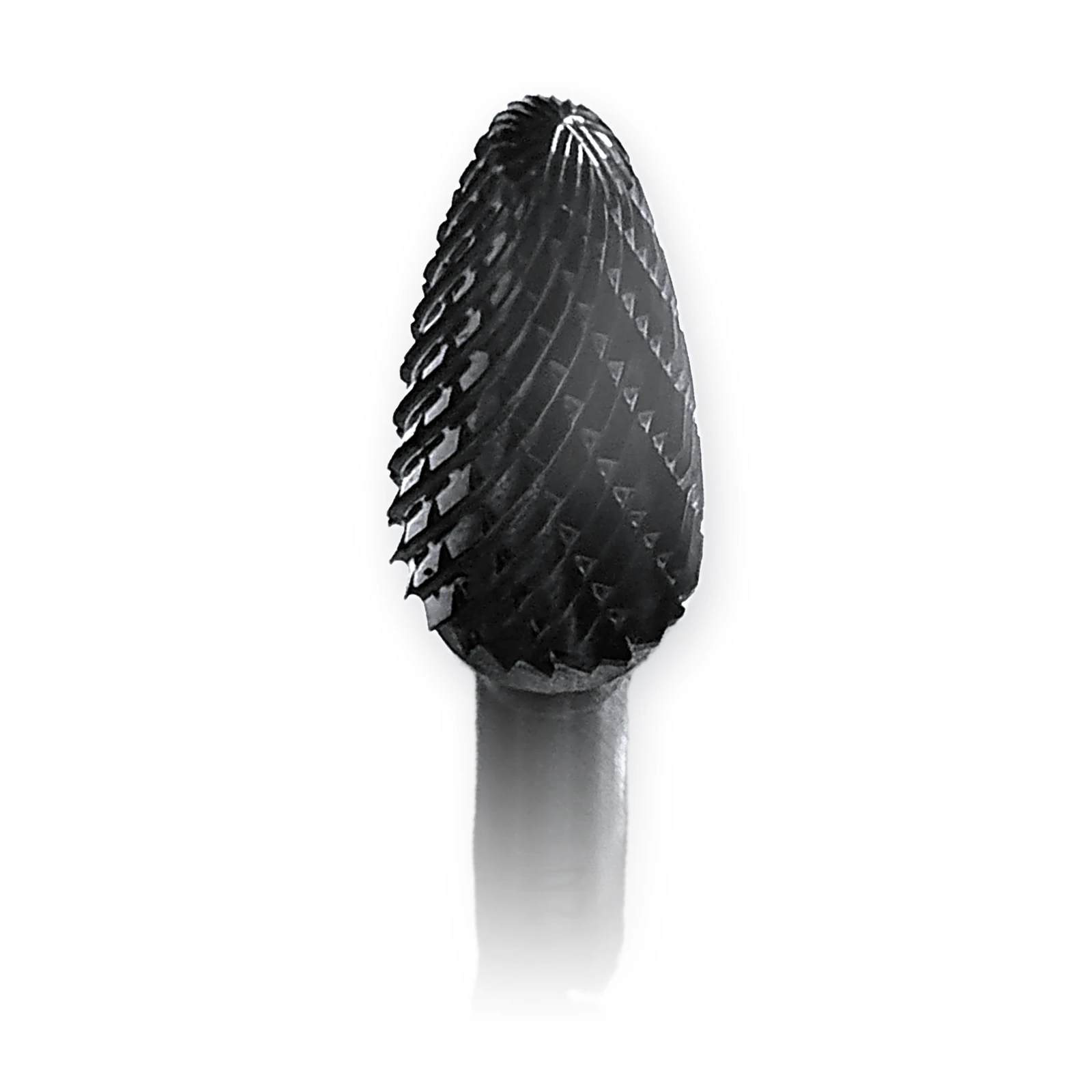
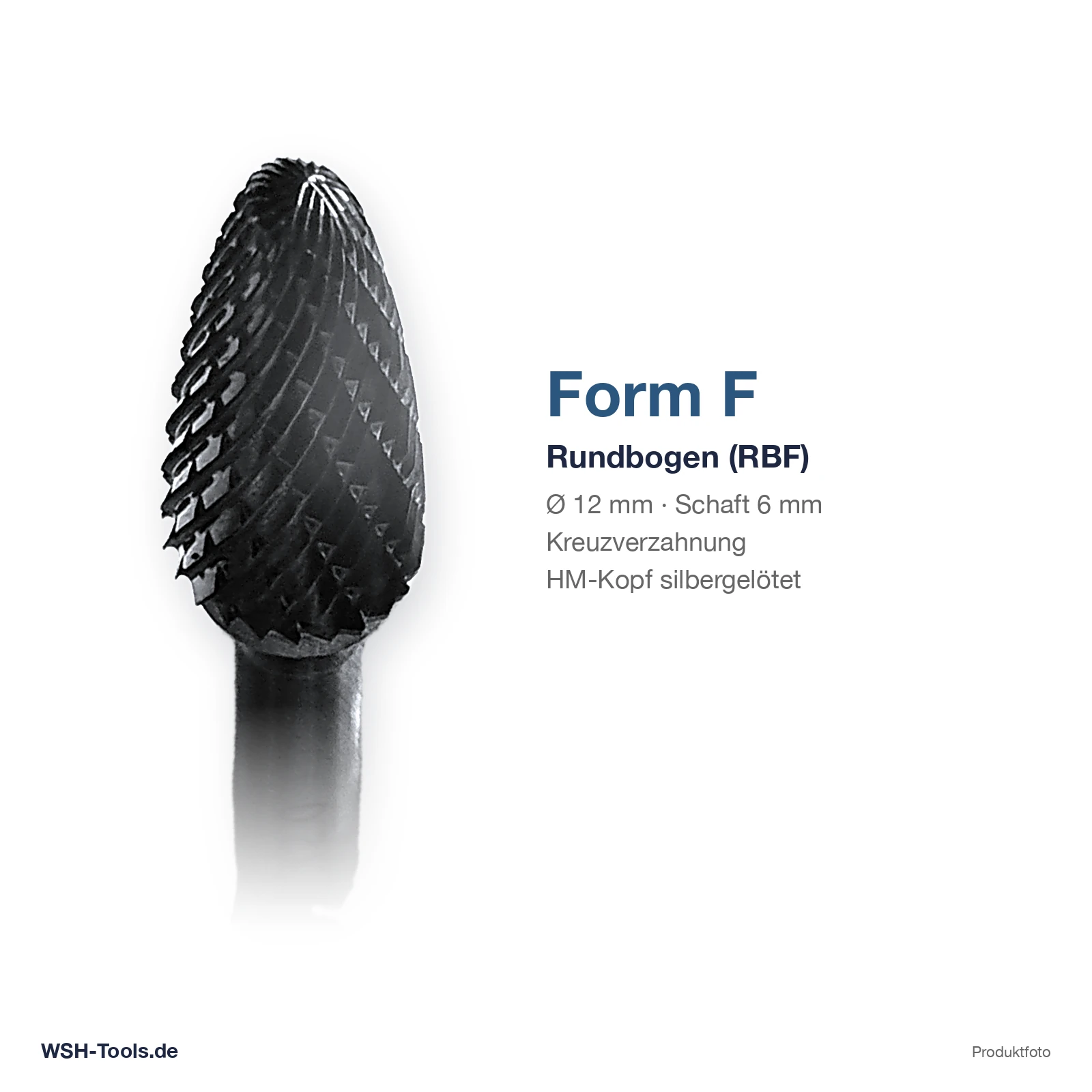
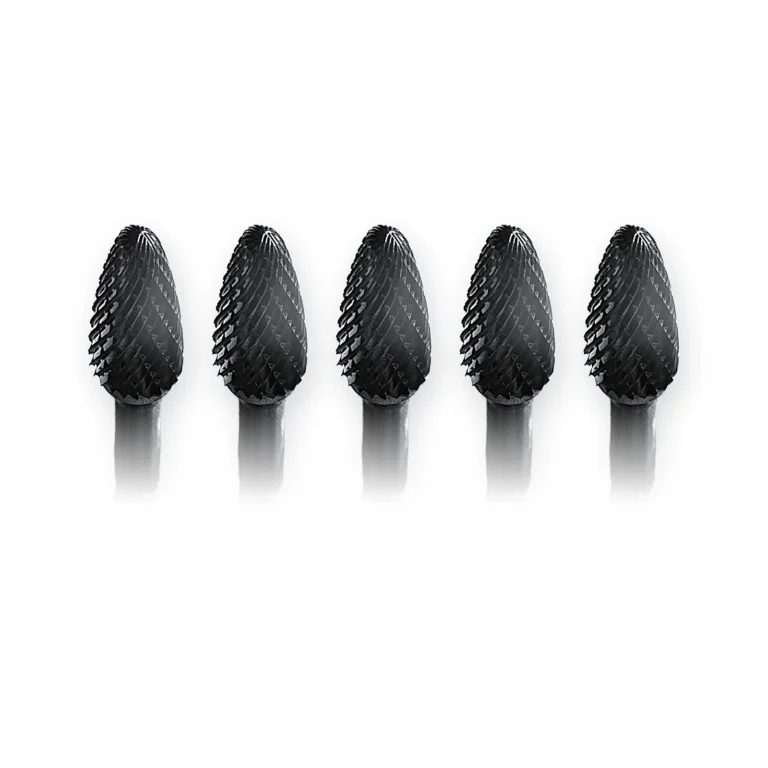
Carbide rotary burr shape F – ball-nosed tree (RBF), Ø 12 × 25 mm
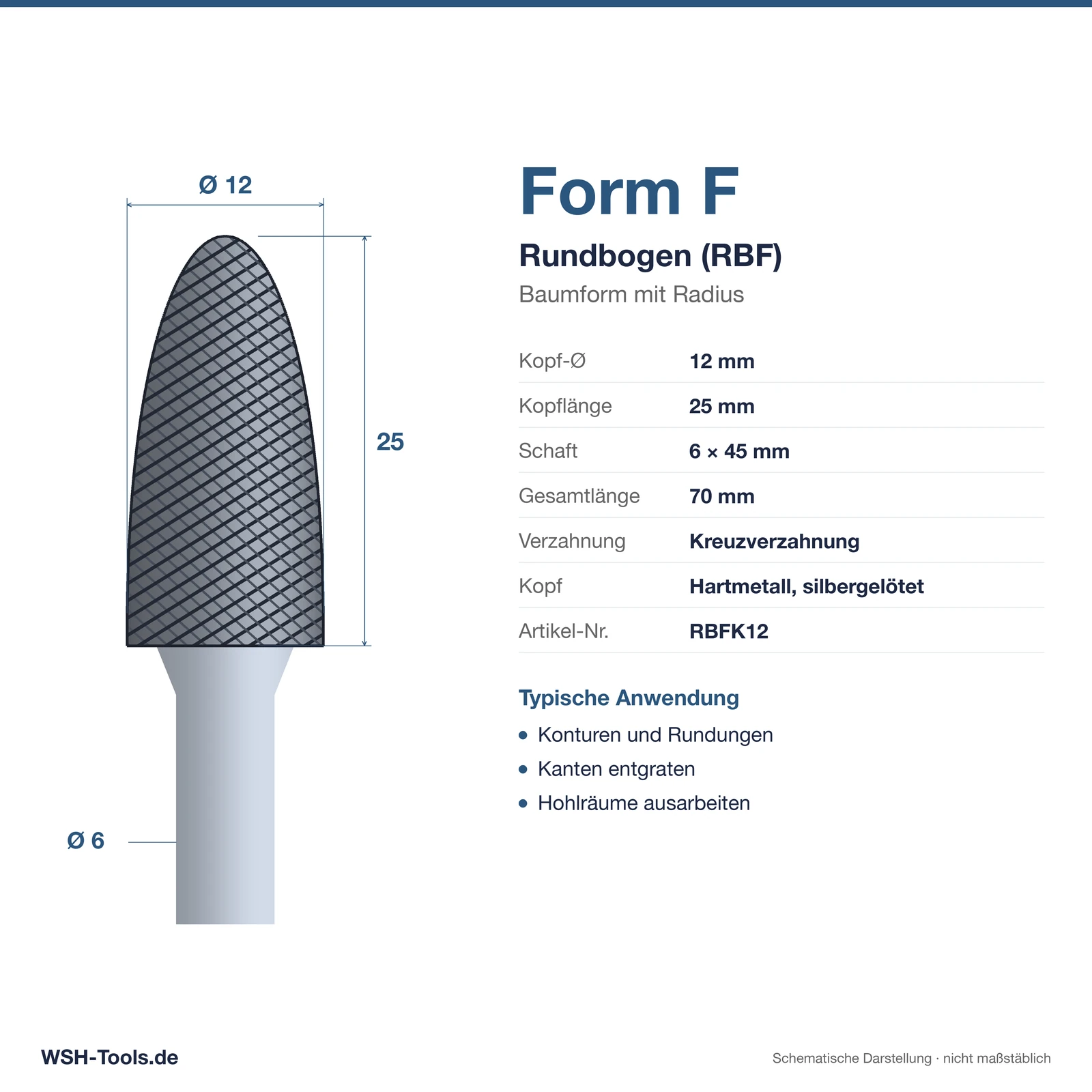
The tree shape with radius is suitable for fillets, contours and fillet welds. Head Ø 12 × 25 mm, shank Ø 6 × 45 mm, overall length 70 mm, double cut for steel, cast steel, stainless steel and cast iron. The carbide head is silver-brazed onto the steel shank, in Deutscher Industriequalität and made in Germany.
Technical data
| Shape |
Shape F – ball-nosed tree |
| DIN code |
RBF 1225/6 |
| Head Ø × length |
12 × 25 mm |
| Shank |
Ø 6 × 45 mm |
| Overall length |
70 mm |
| Cut |
Double cut |
| Materials |
Steel, cast steel, stainless steel and cast iron |
| Head |
Carbide, silver-brazed in Deutscher Industriequalität |
| Origin |
Made in Germany |
| Pack |
1 piece(s) in protective sleeve |
| Item no. |
RBFK12 |
Silver-brazed instead of copper-brazed
Silver solder melts at a much lower temperature than copper solder. The carbide head is heated less during brazing, less stress is created in the carbide, and the joint between head and shank withstands shocks and vibrations better in continuous use. With cheap copper-brazed or friction-welded rotary burrs, this very joint is the typical weak point.
Guide speeds for Ø 12 mm
| Material |
Rotational speed |
| Steel up to 1,200 N/mm², cast steel, grey cast iron |
12,000–16,000 min⁻¹ |
| Hardened / heat-treated steel over 1,200 N/mm² |
7,000–9,000 min⁻¹ |
| Stainless steel (INOX) |
7,000–8,000 min⁻¹ |
Start at the lower speed and increase according to the cutting pattern. Too low a speed causes chatter and tooth breakage.
Application
- For straight grinders and pneumatic die grinders with a 6-mm collet, drive from approx. 300 W.
- Many straight grinders run at 20,000–30,000 min⁻¹ at idle: use a variable-speed tool.
- Clamp the shank as deep as possible, work with light pressure and keep the burr moving.
- Wear safety glasses; carbide chips are sharp.
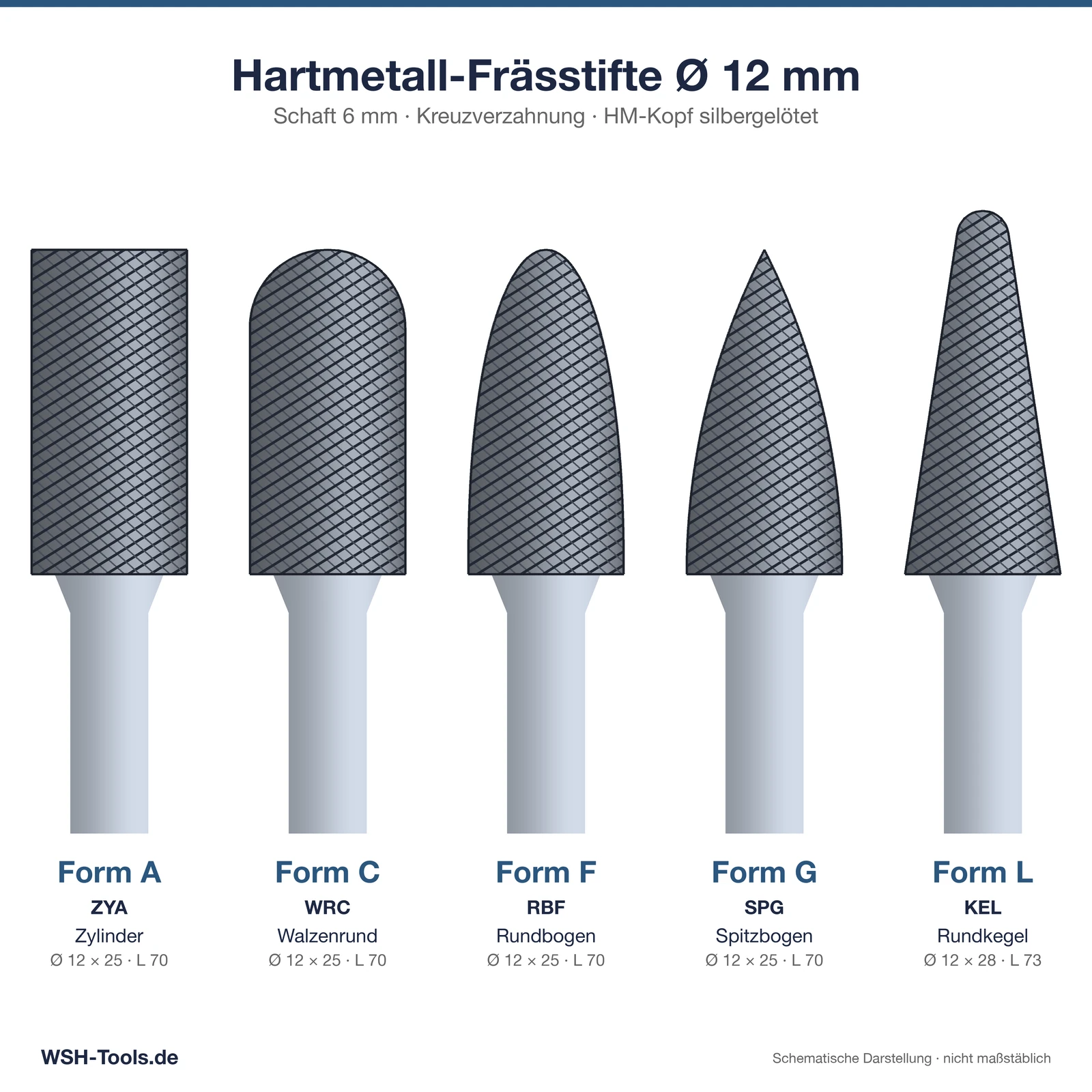
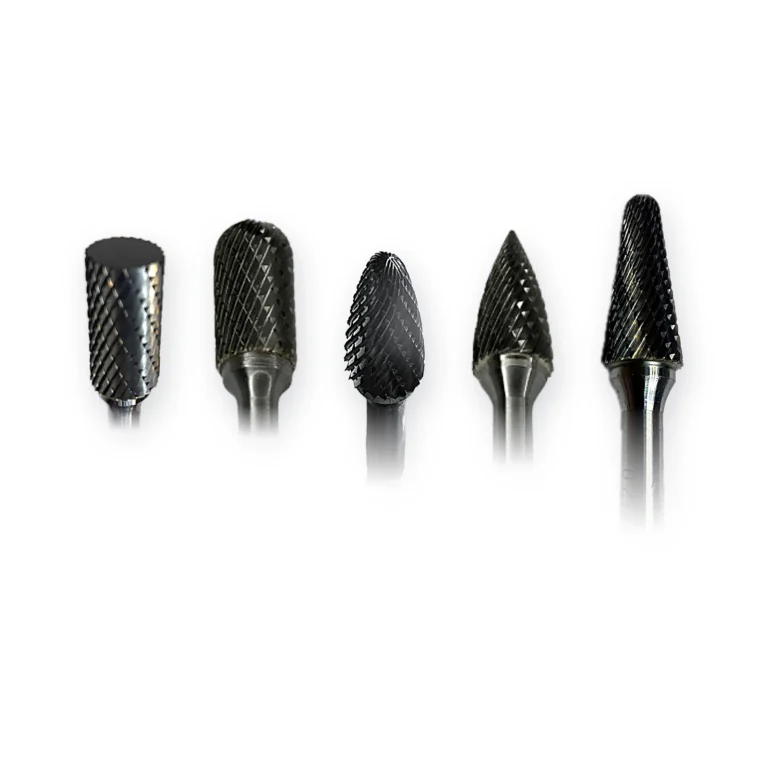
More shapes and packs
Shipping
Within Germany up to 5 pieces as a DHL small parcel for 4.15 € plus VAT (a pack of 5 counts as 5 pieces), above that DHL parcel 7.20 € plus VAT; free shipping from 250 € order value (net). Larger quantities from 100 pieces: quotation via our contact form.
Frequently asked questions
What does silver-brazed mean?
The carbide head is brazed onto the steel shank with silver solder. Silver solder is processed at a lower temperature than copper solder; this protects the carbide and results in a strong joint between head and shank.
Will the rotary burr fit my straight grinder?
Yes, if the tool has a 6-mm collet. For 12 mm in steel or stainless steel, a variable-speed tool is ideal.
Can I use the rotary burr in a drill?
Only to a limited extent. Drills usually only reach around 3,000 min⁻¹; that is too slow for carbide rotary burrs.
Can I use the rotary burr for aluminium?
Better not: double-cut burrs clog in aluminium. For that, there is shape C with ALU cut.
Frequently asked questions
What speed do I need for the rotary burr Ø 12 mm?
Guide values: steel up to 1,200 N/mm², cast steel and grey cast iron 12,000–16,000 min⁻¹, hardened or heat-treated steel over 1,200 N/mm² 7,000–9,000 min⁻¹, stainless steel (INOX) 7,000–8,000 min⁻¹. Start at the lower speed and increase according to the cutting pattern.
Will the rotary burr fit my straight grinder?
Yes, if the tool has a 6-mm collet; a drive from approx. 300 W is recommended. As many straight grinders run at 20,000–30,000 min⁻¹ at idle, use a variable-speed tool.
Can I use the rotary burr for aluminium?
Better not: double-cut rotary burrs clog in aluminium. For that, there is shape C with ALU cut.
What does silver-brazed mean?
The carbide head is brazed onto the steel shank with silver solder. Silver solder is processed at a lower temperature than copper solder; this protects the carbide and results in a strong joint between head and shank.
Can I use the rotary burr in a drill?
Only to a limited extent. Drills usually only reach around 3,000 min⁻¹, which is too slow for carbide rotary burrs.

Reviews
There are no reviews yet.