
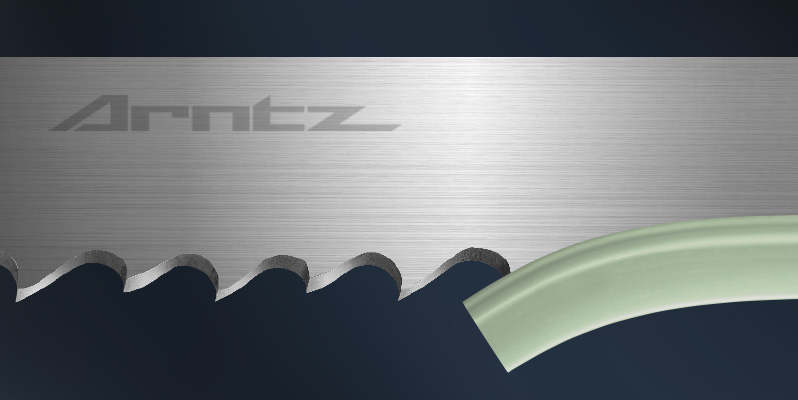
ARNTZ 401 VL-PLUS bimetal band saw blade M42 6830 x 41 x 1.30
ARNTZ 401 VL-PLUS bimetal band saw blade M42 6830 x 41 x 1.30 in size 6830 x 41 x 1.30 for versatile use from thin-walled profiles to large solid workpieces. Wide choice of tooth pitches.
69,23 €
plus shipping
ARNTZ 401 VL-PLUS bimetal band saw blade M42 6830 x 41 x 1.30
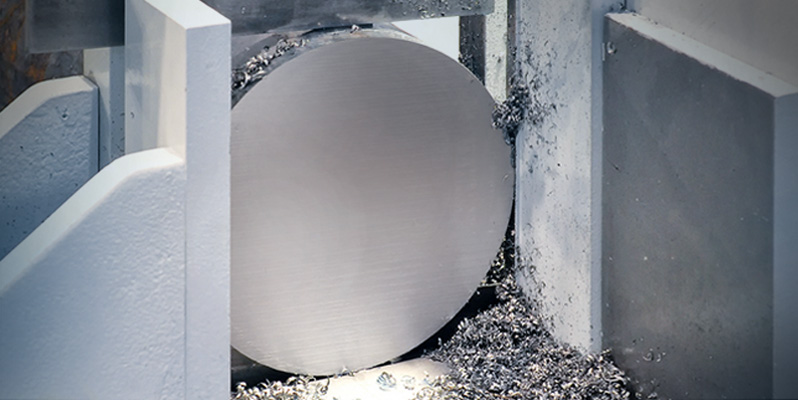
The ARNTZ 401 VL-PLUS bimetal band saw blade M42 6830 x 41 x 1.30 is the economical solution with a wide choice of band widths and tooth pitches. It is versatile, from thin-walled profiles to large solid workpieces, in general applications, steel production, foundries and recycling. The M42 bimetal design combines a wear-resistant HSS cutting edge with a flexible steel body; depending on the tooth pitch, the rake angle is 0° or 10°. As a band saw blade 6830 x 41 x 1.30 mm, it fits metal band saws of all manufacturers with this band length.
Specifications
 M42
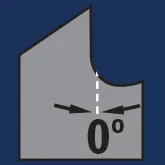 0°
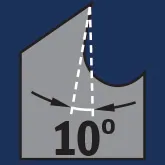 10°
Materials
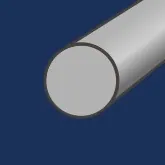 Solid material round small
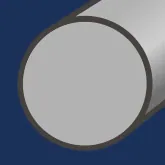 Solid material round large
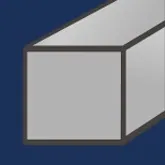 Solid material square large
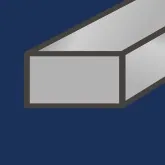 Solid material rectangular
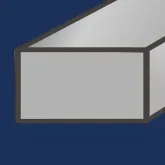 Solid material rectangular very large
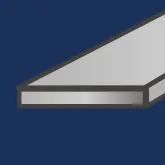 Sheet metal
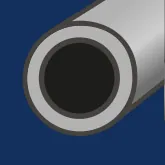 Round tube standard
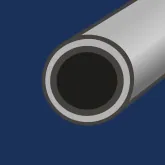 Small round tube thin-walled
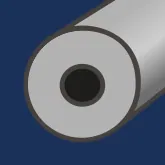 Round tube thick-walled
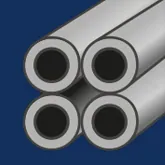 Tube bundle
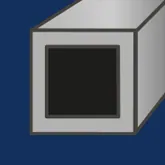 Square tube large
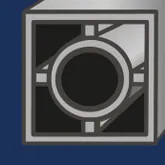 Aluminium profile
More band saw blades: ARNTZ 401 VL-PLUS · ARNTZ 402 VL-GP · ARNTZ 431 SPRINT-PLUS · ARNTZ 440 X-CELL · ARNTZ 457 X-FIT · ARNTZ 458 X-FIT MAX · ARNTZ 531 SPRINT-PRO · ARNTZ 540 X-CELL PRO · ARNTZ 557 X-PRO · ARNTZ 558 X-PRO MAX
- Dimensions: 6830 × 41 × 1.30 mm (length × width × thickness)
- Material: bimetal M42 (HSS cutting edge on flexible steel band)
- Series: ARNTZ 401 VL-PLUS, economical band saw blade with a wide choice of widths and tooth pitches
- Teeth: rake angle 0° or 10°, depending on tooth pitch
- Application: thin-walled profiles to large solid workpieces, general applications, steel production, foundries and recycling
- Tooth pitches (TPI, teeth per inch, variable or constant pitch): 1.4/2, 2/3, 3/4, 4/6
- Suitable for: production band saw machines
- Band marking: ARNTZ
- Sold: from 5 pieces, in steps of 5
- ARNTZ series 401 (VL-PLUS), bimetal M42
- Band size 6830 × 41 × 1.30 mm – fits band saw machines with this band length, width and thickness
- ARNTZ width/thickness code: 041130 (width 41 mm, thickness 1.30 mm)
- Check band size and tooth pitch in the machine manual before ordering

ARNTZ sawing technology since 1793
ARNTZ 401 VL-PLUS – bimetal band saw blade M42
The versatile entry-level series with a wide choice of tooth pitches: from thin-walled tubes, profiles and sheet metal to large solid cross-sections.
Tooth tips of HSS M42, sold in steps of 5 (67 mm also in steps of 3), welded endless – band widths 20 to 67 mm.
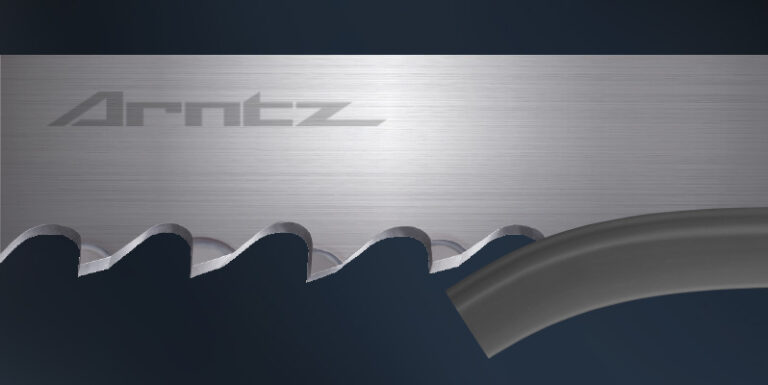
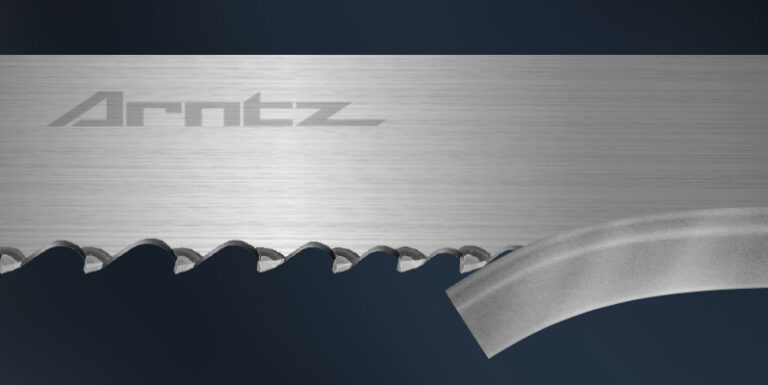
How the ARNTZ 401 VL-PLUS is built
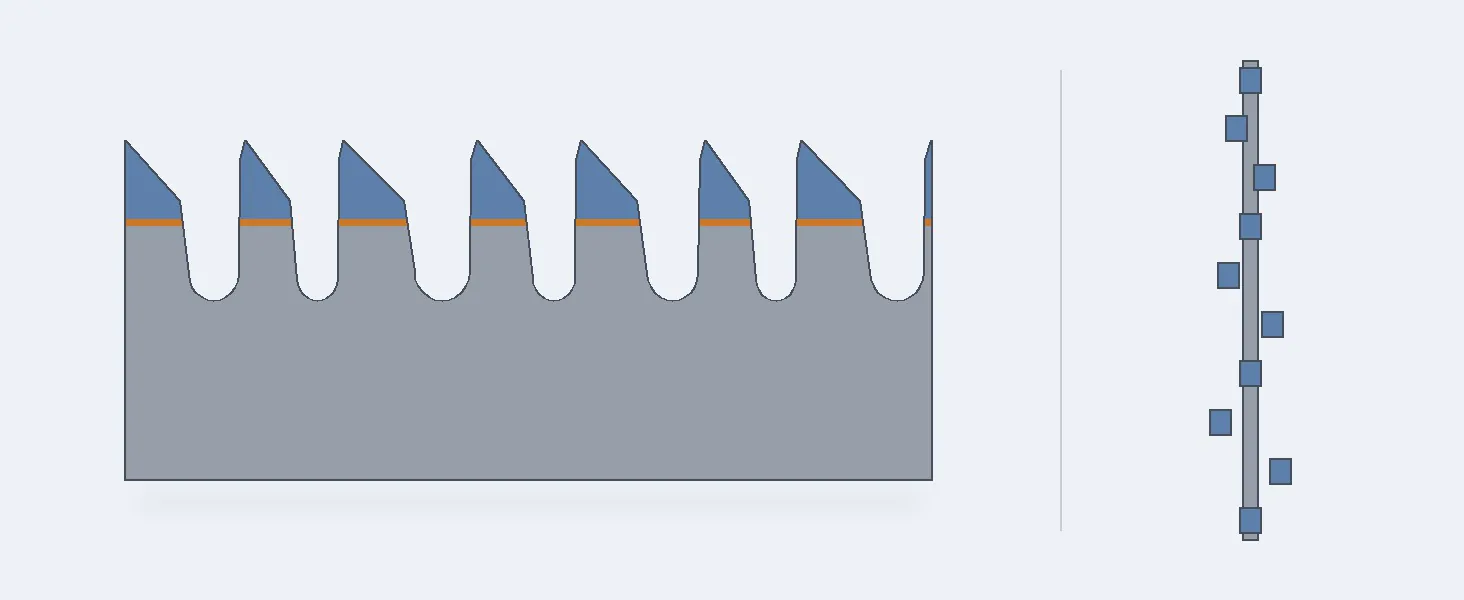
Tooth tip HSS M42
High-speed steel M42 (1.3247), approx. 68–69 HRC – wear-resistant with long edge life for steel, stainless steel and non-ferrous metals.
Spring steel backing
Alloyed spring steel at approx. 50 HRC – highly flexible for running over the band wheels.
Permanently welded
HSS flat wire and backing are joined by electron-beam or laser welding – every tooth tip consists of hardened HSS.
Many tooth pitches
1.4/2 to 10/14 TPI: fine pitches for thin-walled tubes, profiles and sheet metal, coarse pitches for large solid cross-sections.
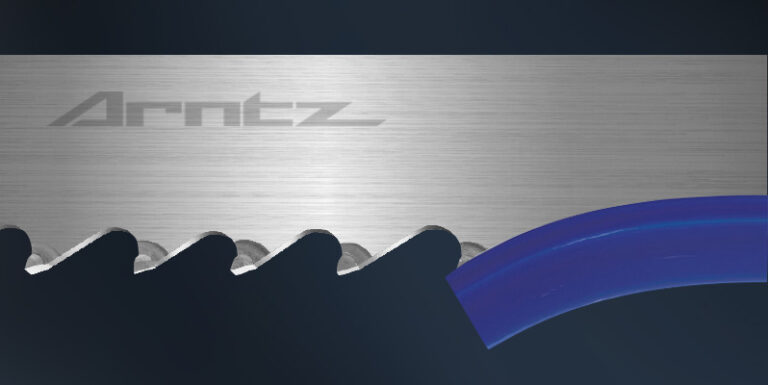
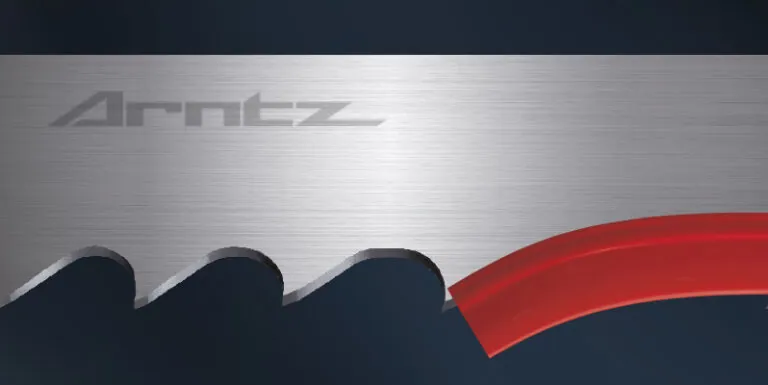
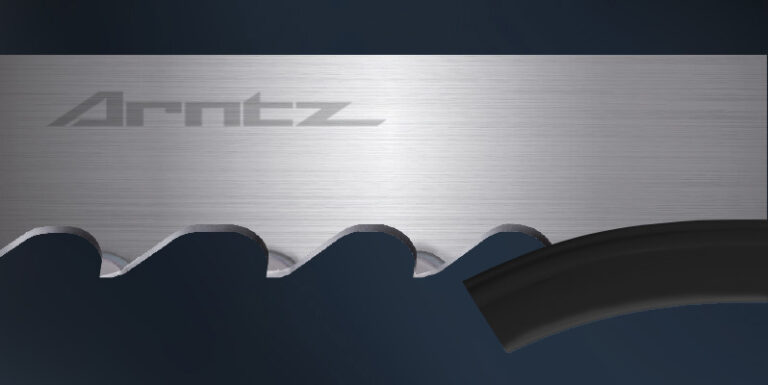
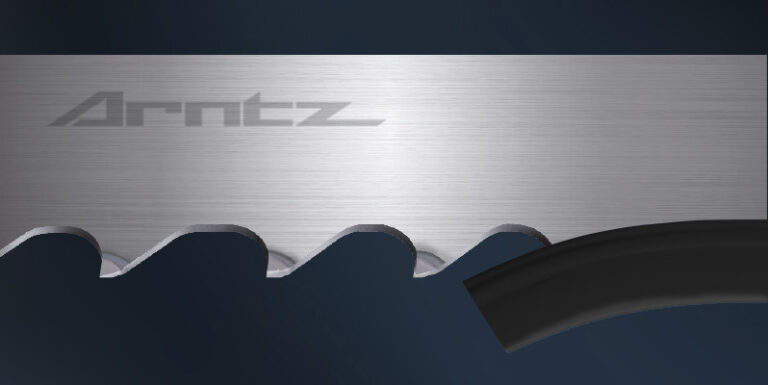
Rake angle 0° and 10°
Combination tooth geometry with 0° and 10° rake angle according to ARNTZ – versatile for solid material, tubes and profiles.
Applications of the ARNTZ 401 VL-PLUS
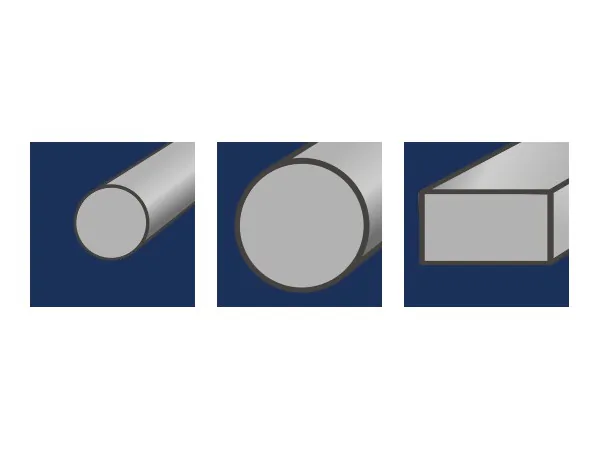
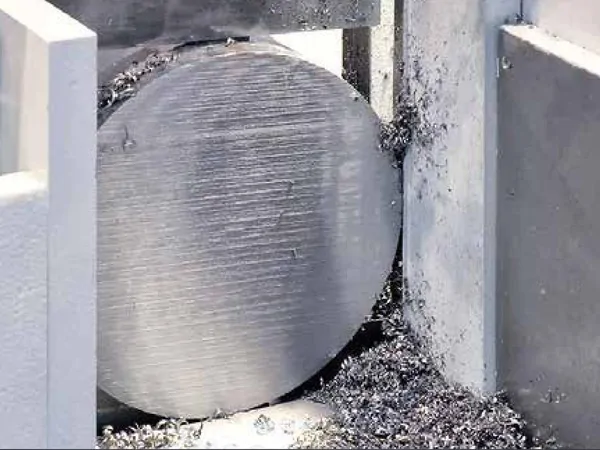
Solid material
Round small and large, square large, rectangular up to very large
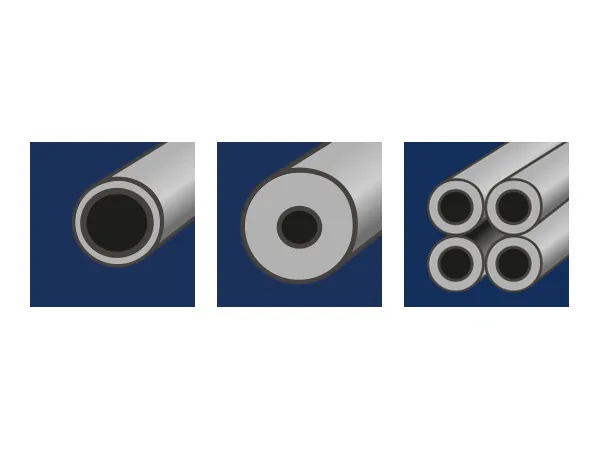
Tubes and bundles
Round tube standard, thin-walled and thick-walled, square tube large, tube bundles
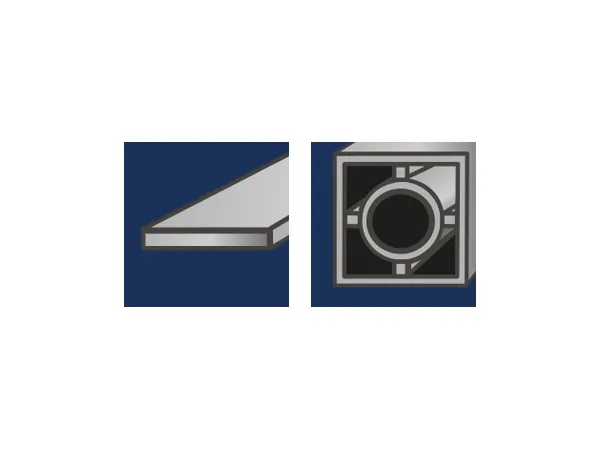
Sheet metal and aluminium profiles
Sheet metal and aluminium profiles – with a fine pitch
Industries
General applications, steel production, foundries and recycling
Which tooth pitch? ARNTZ guide values for single cuts
| Solid material up to 25 mm | 10/14 TPI |
|---|---|
| Solid material 20–40 mm | 8/11 or 8/12 TPI |
| Solid material 30–60 mm | 6/10 TPI |
| Solid material 40–70 mm | 5/7 or 5/8 TPI |
| Solid material 60–110 mm | 4/6 TPI |
| Solid material 80–140 mm | 3/4 TPI |
| Solid material 120–350 mm | 2/3 TPI |
| Solid material 250–550 mm | 1.4/2 TPI |
| Solid material 380–750 mm | 1/1.3 TPI |
| Solid material from 550 mm | 0.75/1.25 TPI |
| Thin-walled tubes, profiles | Wall thickness 2–3 mm: 14 or 10/14 TPI; 4–6 mm: 14 to 6/10 TPI; 8–10 mm: 8/11 to 5/8 TPI – the larger the outside diameter, the coarser the pitch. |
| Thick-walled tubes, profiles | Wall thickness 10–30 mm: 4/6 to 2/3 TPI; 50–100 mm: 3/4 to 1.4/2 TPI – the larger the outside diameter, the coarser the pitch. |
| Several profiles side by side | Choose the pitch for twice the wall thickness (bundle cutting). |
| Rule of thumb | Always keep at least 3 teeth engaged. Large workpieces: coarser pitch for less load and better chip evacuation. Small workpieces: finer pitch to avoid burr formation. |
| Your choice | The range below shows which pitches are available in your band width. The ranges overlap: at the limit, choose the coarser pitch for solid material and the finer pitch for thin walls. |
ARNTZ 401 VL-PLUS range: sizes and tooth pitches
| Supplied as | Single band saw blades, welded endless, sold in steps of 5 (67 mm also in steps of 3). Length, width and thickness are specified by the manufacturer of your band saw. |
|---|---|
| Tooth tips | High-speed steel M42 (1.3247), approx. 68–69 HRC |
| Backing | Alloyed spring steel, approx. 50 HRC, tooth tips joined by electron-beam or laser welding |
| Rake angle / category | 0° and 10° · ARNTZ category Standard |
| 20 × 0.9 mm | 4/6, 5/8, 6/10, 8/12, 10/14 TPI · lengths 2000–5100 mm |
| 27 × 0.9 mm | 2/3, 3/4, 4/6, 5/8, 6/10, 8/12, 10/14 TPI · lengths 2360–8500 mm |
| 34 × 1.1 mm | 2/3, 3/4, 4/6, 5/8, 6/10, 8/12, 10/14 TPI · lengths 3505–7675 mm |
| 41 × 1.3 mm | 1.4/2, 2/3, 3/4, 4/6 TPI · lengths 4115–8625 mm |
| 54 × 1.6 mm | 1.4/2, 2/3, 3/4, 4/6 TPI · lengths 5820–11880 mm |
| 67 × 1.6 mm | 1.4/2, 2/3 TPI · lengths 5920–14000 mm |
| Band tension (guide value) | According to ARNTZ at least 200 N/mm² up to 27 mm width, 250 N/mm² for 34–80 mm – the machine manufacturer's specifications take precedence. |
The ARNTZ bimetal series compared
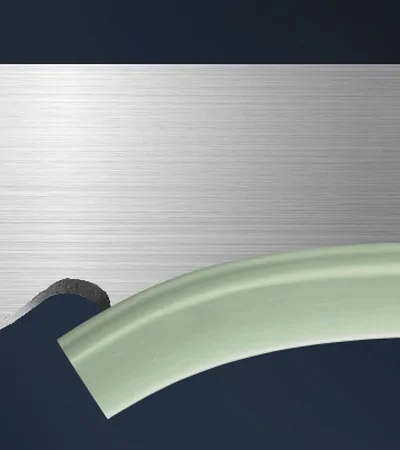 ARNTZ 401 VL-PLUSthis series | 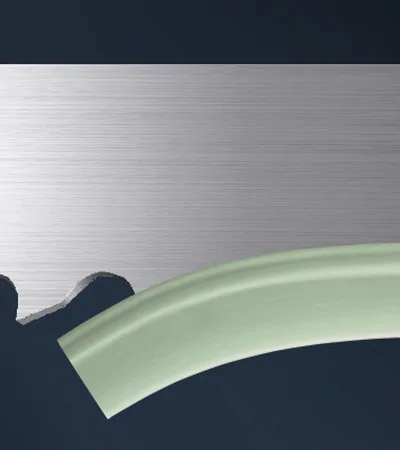 ARNTZ 402 VL-GP | 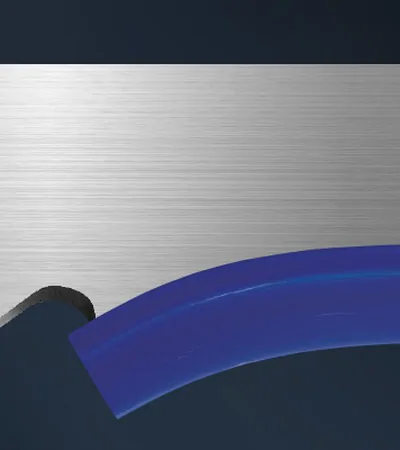 ARNTZ 431 SPRINT-PLUS | 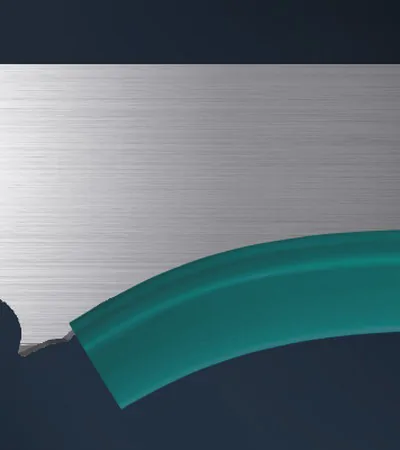 ARNTZ 440 X-CELL | 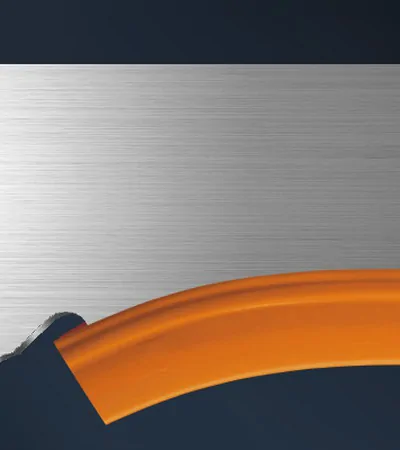 ARNTZ 457 X-FIT | 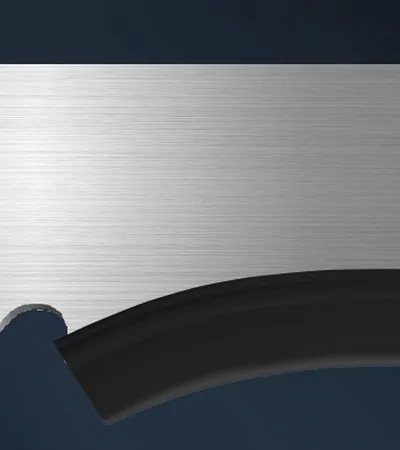 ARNTZ 458 X-FIT MAX |  ARNTZ 531 SPRINT-PRO | |
|---|---|---|---|---|---|---|---|
| Tooth tip | HSS M42 | HSS M42 | HSS M42 | HSS M42 | HSS M42 | HSS M42 | HSS M51 |
| ARNTZ category | Standard | Standard | Standard | Professional Plus | Standard | Professional | Professional |
| Rake angle | 0° and 10° | 5–7° positive | 0° and 10° | 11° | 5–7° positive | 5–7° positive | 10° |
| Focus | Entry level, many pitches | Mixed use, robust | Classic, 11 pitches | Work-hardening materials | Profiles and beams, shock-resistant | Large beams, bundle cutting | Classic in M51 |
| Solid material | ✓ | ✓ | ✓ | ✓ | ✓ | – | ✓ |
| Very large solid material | ✓ | – | ✓ | ✓ | – | – | ✓ |
| Thin-walled tubes and sheet metal | ✓ | – | ✓ | – | – | – | – |
| Bundle cutting | ✓ | ✓ | ✓ | – | ✓ | ✓ | – |
| Steel beams and profiles | – | ✓ | – | – | ✓ | ✓ | – |
| Special alloys | – | – | – | ✓ | – | – | ✓ |
| Work-hardening materials | – | – | – | ✓ | – | – | – |
| Band widths | 20–67 mm | 20–67 mm | 20–80 mm | 34–80 mm | 20–67 mm | 34–67 mm | 27–80 mm |
FAQ
Which band length, width and thickness do I need?
The dimensions are specified by the manufacturer of your band saw (operating manual or rating plate). Width = tooth tip to band back, thickness = thickness of the backing, length = total length of the endless welded band.
How do I run in a new band saw blade correctly?
New teeth are very sharp and prone to chipping: reduce the cutting speed by approx. 20 % and the feed by 20–50 % depending on the material, then increase the feed step by step to the normal value.
What should I watch out for when unpacking and fitting?
Open the band away from your body wearing cut-resistant gloves and safety glasses. Fit it only with the machine secured, teeth in the running direction, tension as specified by the machine manufacturer. Do not wear gloves at a running saw.
M42 or M51 – what is the difference?
M42 (1.3247, approx. 68–69 HRC) is the proven standard for steel, stainless steel and non-ferrous metals. M51 (1.3207, powder-metallurgical, approx. 69 HRC) stays hard longer at high cutting temperatures – for difficult-to-machine materials.
Why in steps of 5, and who sells the blades?
Band saw blades are wear parts – with several identical blades your saw stays ready for use. Sales and advice: WSH-TOOLS, family-run specialist tool dealer from Grünsfeld, Germany, with over 35 years of experience.
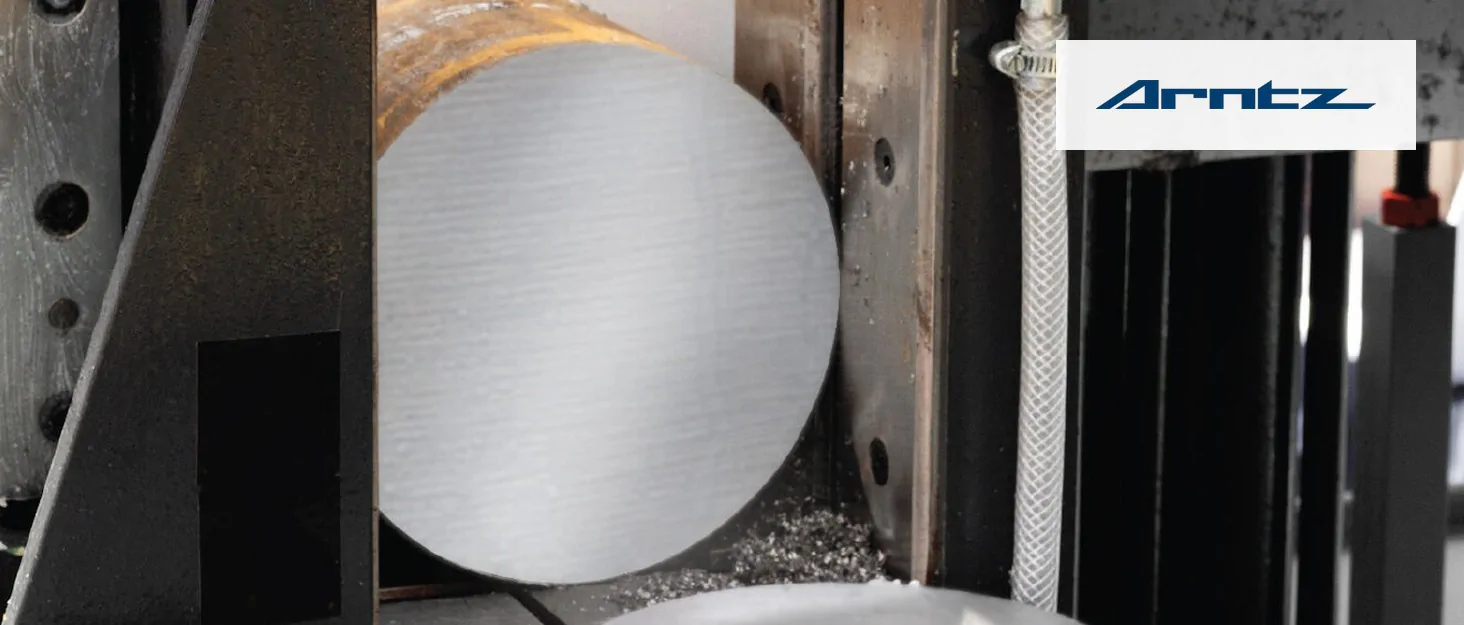
About ARNTZ
ARNTZ – sawing technology since 1793
Owner-managed in the 7th generation, since 1793: bimetal and carbide band saw blades.
ARNTZ has been developing sawing technology since 1793 – owner-managed in the 7th generation.
Bimetal band saw blades since 1988, sold in around 80 countries.
- What is a bimetal band saw blade?
- A band made of two materials: tooth tips of hard high-speed steel (M42 or M51), welded to a flexible spring steel backing.
- Which series suits my material?
- That depends on the material, cross-section and band saw. The product pages show the applications, sizes and tooth pitches for each series.
- Who sells and advises?
- WSH-TOOLS, family-run specialist tool dealer from Grünsfeld, Germany, with over 35 years of experience in cutting technology.
Product safety
- Hersteller
- ARNTZ GmbH + Co. KG
Lenneper Straße 35, 42855 Remscheid, Germany
Email: info@arntz.de · Phone: +49 2191 9986-01 - Responsible person
- ARNTZ GmbH + Co. KG (manufacturer based in the EU)
Lenneper Straße 35, 42855 Remscheid, Germany
Email: info@arntz.de - Warnings and safety information
Safety information (PDF): ARNTZ bimetal band saw blades – please read completely before first use and keep for reference; observe the operating manual of the band saw machine.
To go with sawing: coolant
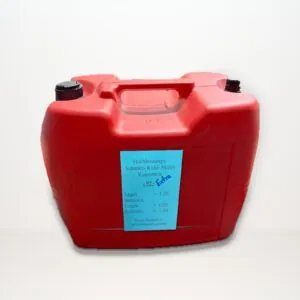
WSH-Tools.de coolant Z92 Extra, water-miscible, 20 l canister red
Water-miscible coolant for cooling and lubricating in metalworking, for example when sawing with a metal band saw.
- 20-l-Kunststoffkanister, rot
- Concentrate, water-miscible (sawing 1:20)
- not dangerous goods
Achtung · H315 Causes skin irritation · H319 Causes serious eye irritation · Safety data sheet (PDF)
Customers also bought
Questions about this band saw blade?
Can't find your band size or have questions about the tooth pitch? We are happy to help.
Our locationWerkzeugservice M&P Hoeß GbR | WSH-Tools.deWaltersberg 13
97947 Grünsfeld
Reviews
There are no reviews yet.